
When an expanding enterprise in Nepal reaches operational complexity, leadership inevitably turns to Enterprise Resource Planning (ERP). The decision is usually triggered by compounding friction: inventory counts in warehouses do not match sales figures in Kathmandu, financial reporting takes weeks to finalize after month-end, and customer credit limits are routinely exceeded because sales and credit teams operate in separate silos.
However, ERP is rarely a single software product. Fundamentally, ERP is an integration architecture: a unified data layer that connects procurement, inventory, accounting, sales, human resources, and customer management into one synchronized operational engine.
What an integrated ERP transaction actually looks like
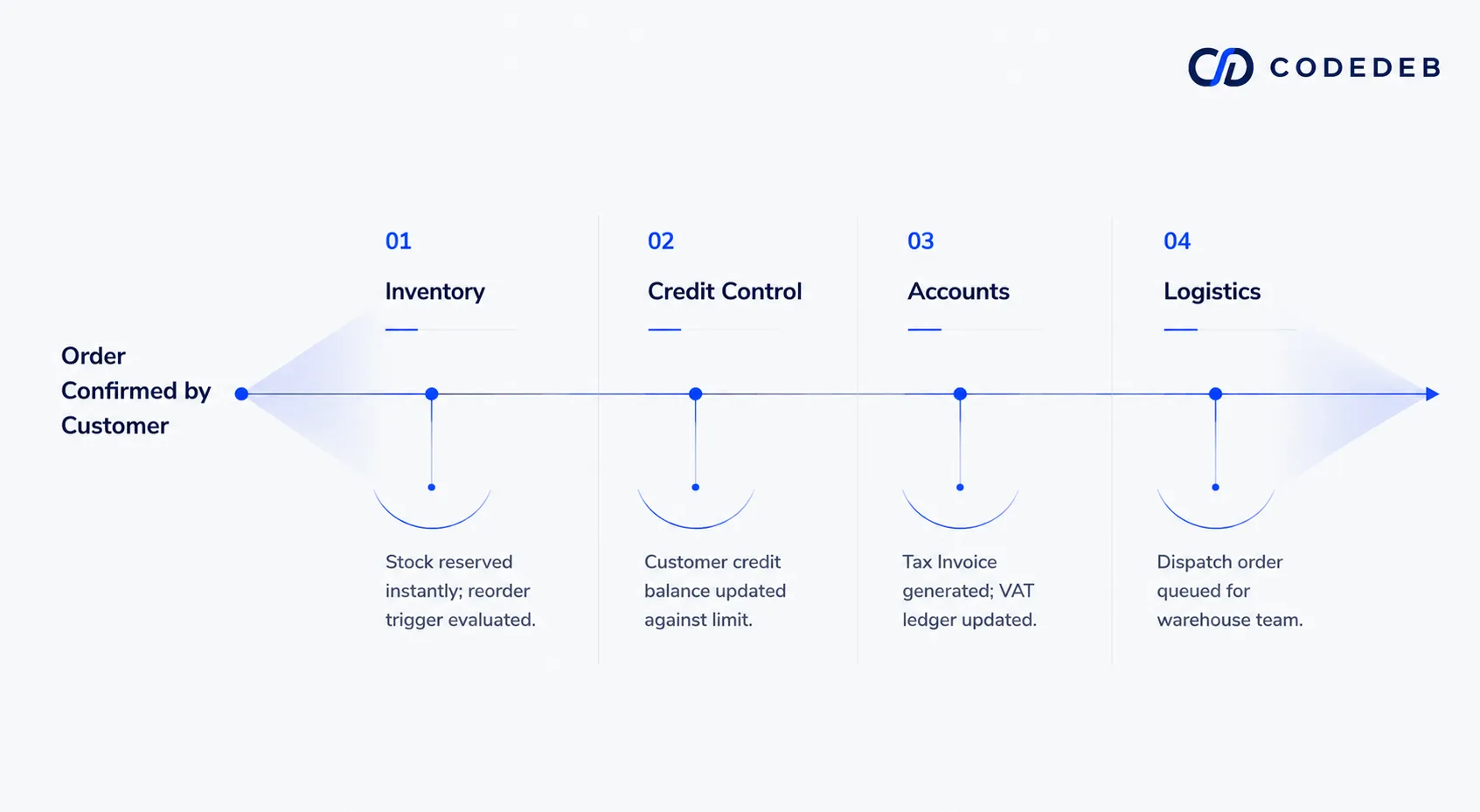
To understand why ERP implementation is complex, examine a single operational event: a customer approving a bulk order for commercial building materials.
In a fragmented organization, this single event requires manually updating six isolated tools. In an integrated ERP architecture, that single transaction triggers automated cascading events across the entire operational stack:
Evaluating the three ERP architectural pathways
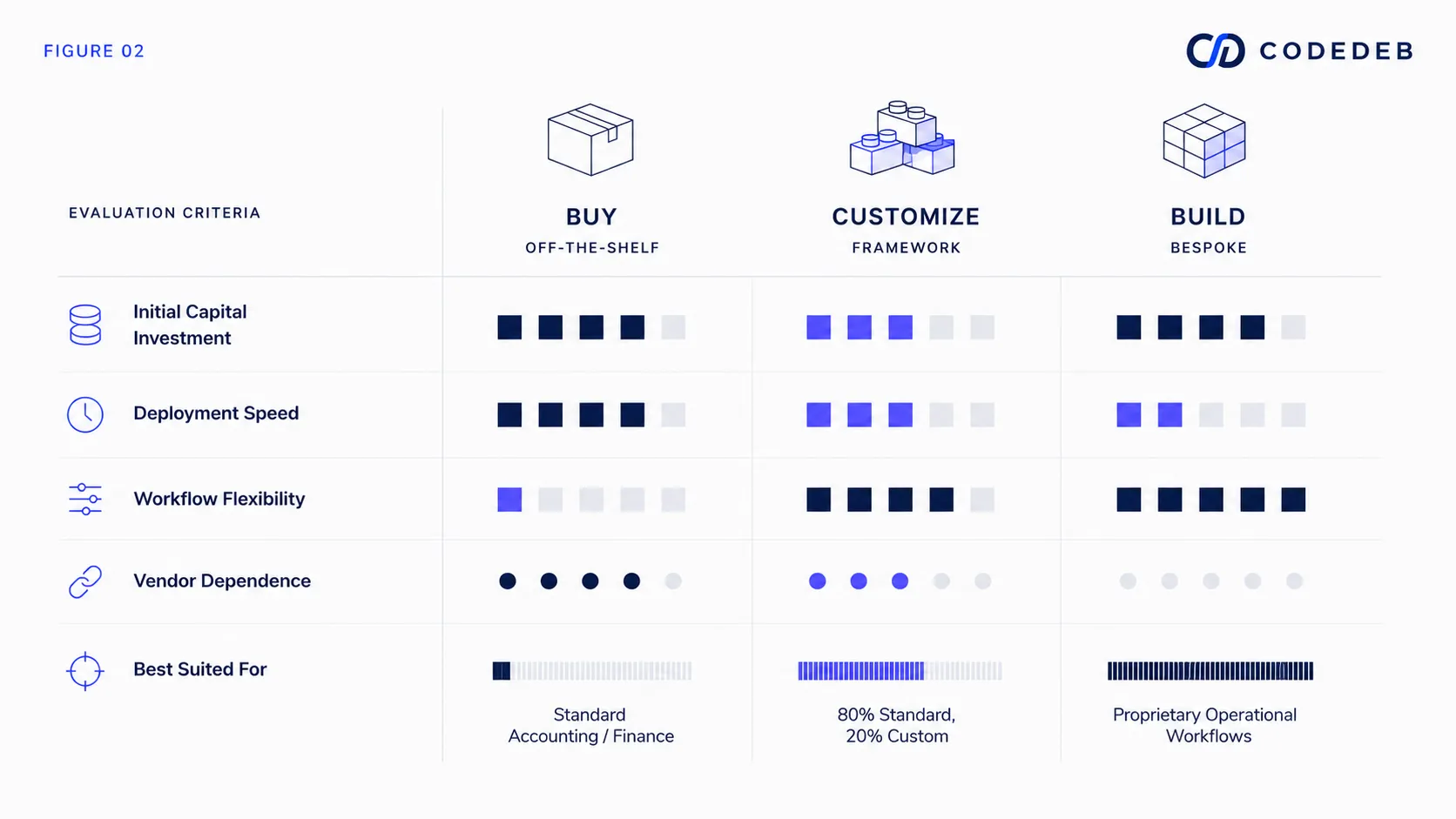
When selecting ERP software, organizations face three distinct architectural strategies: licensing off-the-shelf global ERPs, customizing open modular frameworks, or building bespoke core operations. Each approach carries clear operational tradeoffs.
1. Licensing off-the-shelf ERP (BUY)
Off-the-shelf systems provide pre-built business logic tested across thousands of companies worldwide. They excel at standard corporate accounting, financial ledgers, and compliance management.
The primary drawback is operational rigidity. Off-the-shelf ERPs force your business to adapt its internal workflows to the software's pre-configured assumptions. When a company attempts to heavily customize a rigid off-the-shelf ERP to match a unique local operational practice, implementation costs soar, and future version updates frequently break custom modifications.
2. Customizing an open modular platform (CUSTOMIZE)
This hybrid path utilizes an open core or modular ERP framework as the underlying foundation, while engineering custom operational modules on top. The base engine handles commodity functions, such as general ledgers and double-entry bookkeeping, while custom modules handle proprietary logistics, specialized customer portals, or local payment integrations.
3. Engineering bespoke ERP software (BUILD)
Bespoke development is justified when an enterprise's competitive advantage lies directly in its proprietary operational workflow. For example, a specialized educational institution managing complex credit-hour structures, or a regional distributor running custom multi-tier field commission models, will find that generic ERPs destroy operational speed.
The hidden costs competitors omit
When budgeting for ERP adoption, software license fees represent less than half of the total expenditure. True implementation cost is dominated by non-software operational factors:
- Data cleaning and migration: Historical data in legacy spreadsheets is invariably messy, requiring weeks of manual audit before ingestion.
- Organizational change management: Employees accustomed to informal workarounds must be systematically trained on structured data entry.
- System integration maintenance: Connecting ERP to external payment gateways, e-commerce platforms, and tax reporting systems requires ongoing API monitoring.
The strategic objective of ERP adoption is not achieving maximum software complexity. It is achieving minimum unnecessary uniqueness: standardizing commodity administrative functions while preserving the specific operational workflows that make your organization competitive.