
Managing a private or institutional school in Nepal involves balancing administrative operations across multiple departments: student admissions, daily attendance, fee ledgers, term examination grading, staff payroll, transport logistics, and parent communication. In many institutions, these tasks are still split between paper registers, isolated billing software, and ad-hoc WhatsApp groups.
When student data is fragmented, simple questions become operational hurdles: an accountant cannot verify whether an overdue fee student has received an examination admit card, and a principal cannot instantly inspect school-wide daily attendance trends without calling a meeting.
A modern School Management System (SMS) solves this by placing the canonical student record at the center of the application architecture.
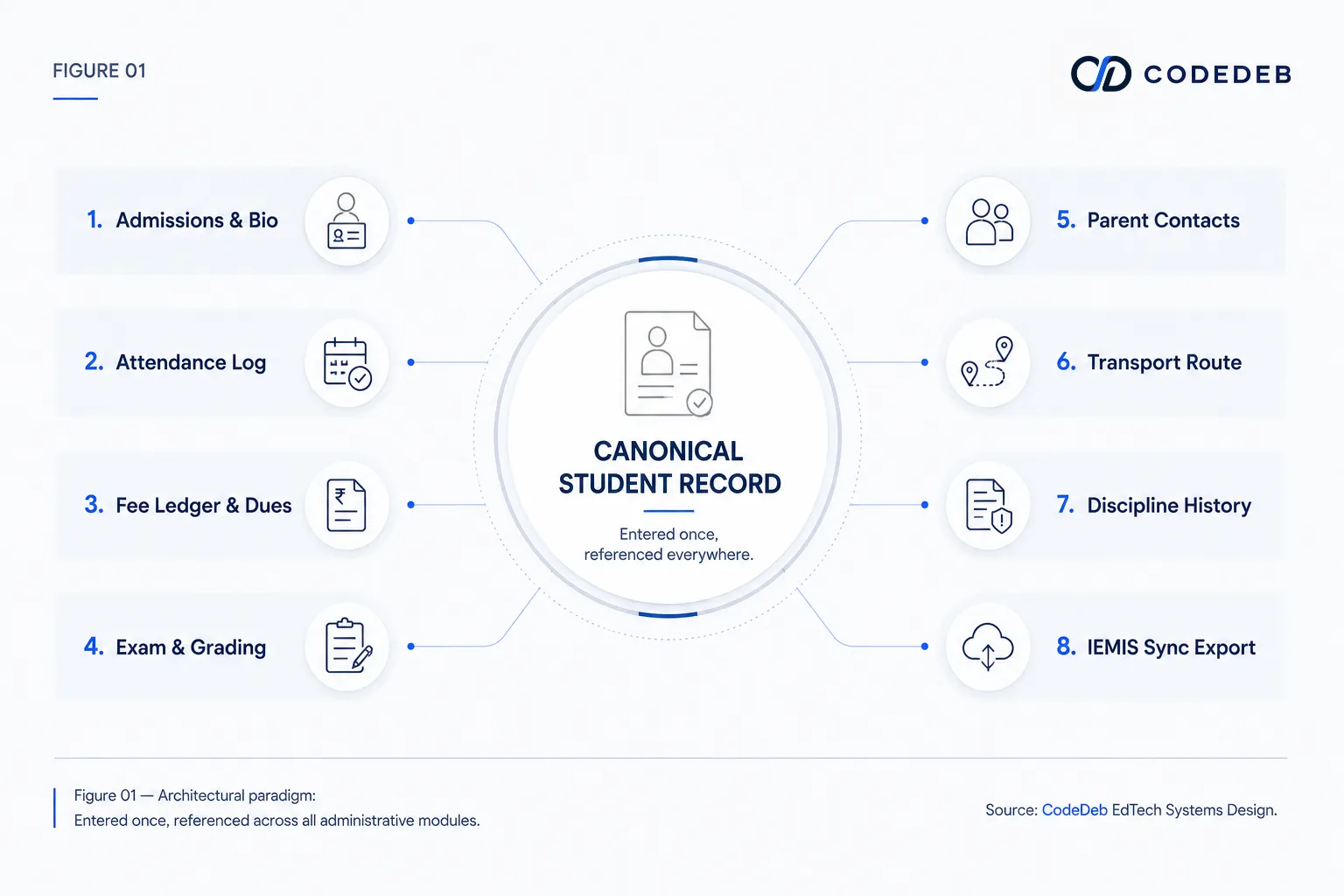
The 12 essential features for effective school management
1. Centralized Student Information System (SIS)
A complete digital profile for every student containing personal details, guardian relationships, medical notices, past academic history, and current class/section allocation. All historical records remain linked to the student ID throughout their school lifecycle.
2. Digital Admission & Enrollment Pipeline
Streamlining new student inquiries from initial application to document verification, entrance testing, principal approval, fee payment, and automated class assignment.
3. Subject-Wise & Daily Attendance Tracking
Allowing teachers to mark attendance in seconds via mobile web interfaces, with automated instant SMS or push notifications sent to parents when a child is absent.
4. Flexible Fee Management & Online Payment Integration
Supporting complex fee structures including tuition, transport, hostel, examination, annual events, scholarships, and custom discounts. Integrating directly with local digital payment gateways (Fonepay, Khalti, eSewa) for instant receipt generation.
5. Examination, Evaluation & Grade Sheet Generation
Automating mark entry, GPA calculations under CDC (Curriculum Development Centre) guidelines, grade lock controls, and batch printing of official progress report cards.
6. Staff & Faculty Management
Managing teacher profiles, subject assignments, period workloads, attendance, leave approvals, and basic salary structure records.
7. Automated Timetable & Period Scheduling
Generating clash-free class schedules based on subject requirements, room availability, and teacher period limits.
8. Multi-Channel Parent Communication
Sending targeted announcements, exam schedules, homework notices, and fee reminders via web portal, push notifications, and SMS.
9. Granular Role-Based Access Control (RBAC)
Ensuring strict permission boundaries: accountants view financial ledgers but cannot edit marks; teachers enter grades but cannot alter fee balances.
10. Complete Audit Logging & Traceability
Maintaining unalterable system logs recording who modified a student's marks, fee discount, or attendance record, along with exact timestamps.
11. Government IEMIS Data Alignment
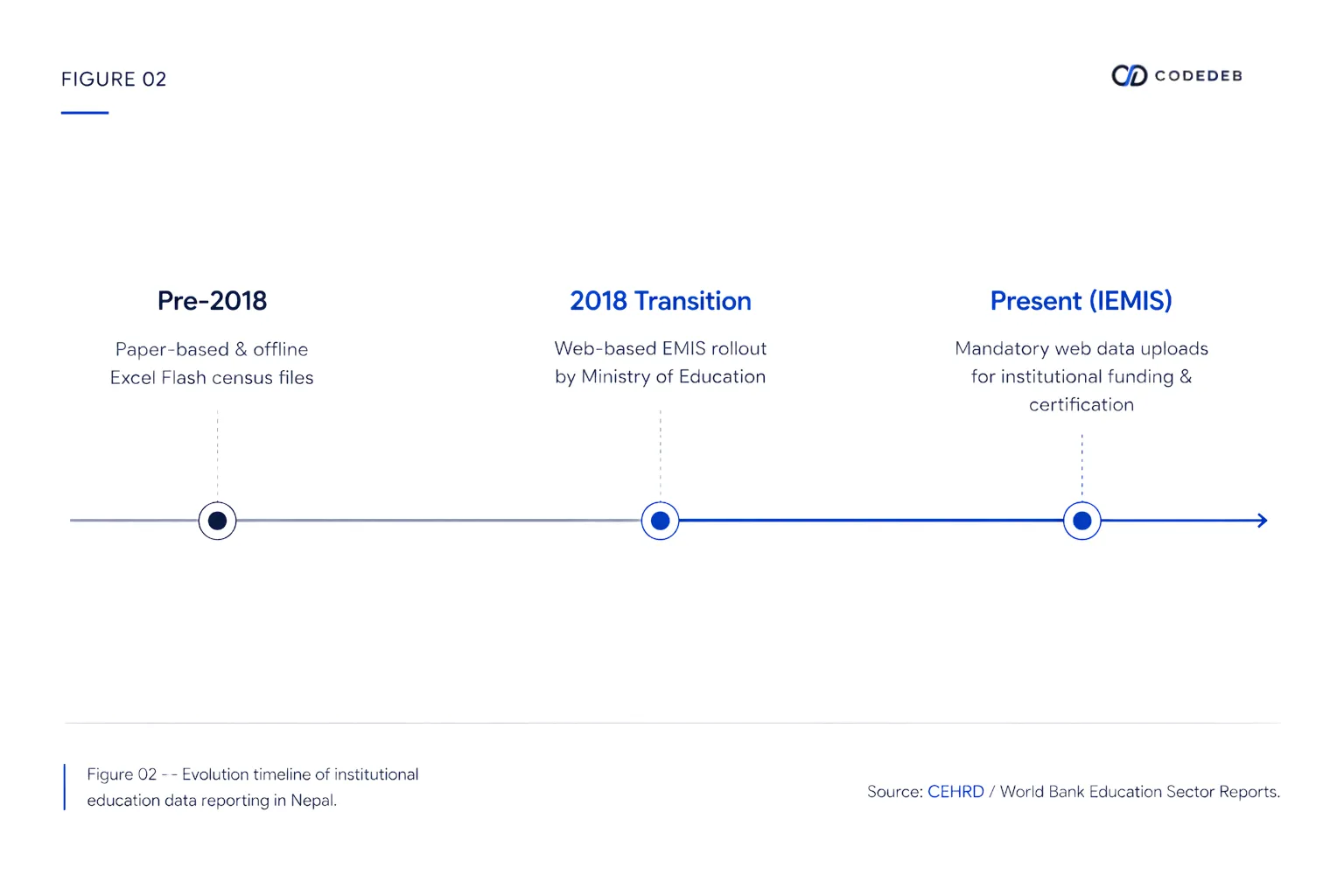
Since the Ministry of Education rolled out the Integrated Educational Management Information System (IEMIS), school software must easily export standardized data formats for mandatory government Flash reporting.[1]
12. Data Ownership & Export Capability
Schools must retain absolute ownership of their operational data, with one-click export functions to CSV and Excel formats to prevent vendor lock-in.
Features schools frequently buy but rarely need first
Educational institutions often waste software budgets on high-friction add-ons before getting their core administration right. Biometric facial recognition gates, complex AI learning recommendation engines, and proprietary internal social networks frequently turn into abandoned features. Focus first on reliable attendance, fee ledgers, exam report generation, and parent communication.